Anemia: A prevalent yet discounted health situation
Anemia is a medical condition in which a person has a lower than normal amount of red blood cells or hemoglobin in their blood. Hemoglobin is the protein in red blood cells that carries oxygen from the lungs to the rest of the body. Without enough hemoglobin, the body’s tissues and organs may not receive enough oxygen to function properly.
Anemia can be caused by a variety of factors, including a deficiency in iron, vitamin B12, or folate, chronic diseases such as kidney disease or cancer, or inherited disorders such as sickle cell anemia. Symptoms of anemia can include fatigue, weakness, shortness of breath, dizziness, and pale skin. Treatment depends on the underlying cause of the anemia and may involve dietary changes, supplements, or medication.
Anemia is a global health problem that affects people of all ages, genders, and socioeconomic backgrounds. According to the World Health Organization (WHO), an estimated 1.62 billion people worldwide suffer from anemia, which is about 24.8% of the global population. Iron-deficiency anemia is the most common type of anemia, affecting an estimated 1 billion people worldwide. Anemia is more common in women than in men, with an estimated 29.4% of non-pregnant women and 38.2% of pregnant women affected. Anemia is a leading cause of maternal mortality and morbidity, particularly in low- and middle-income countries. Children under the age of 5 are also at high risk of anemia, with an estimated 47% of this age group affected worldwide.
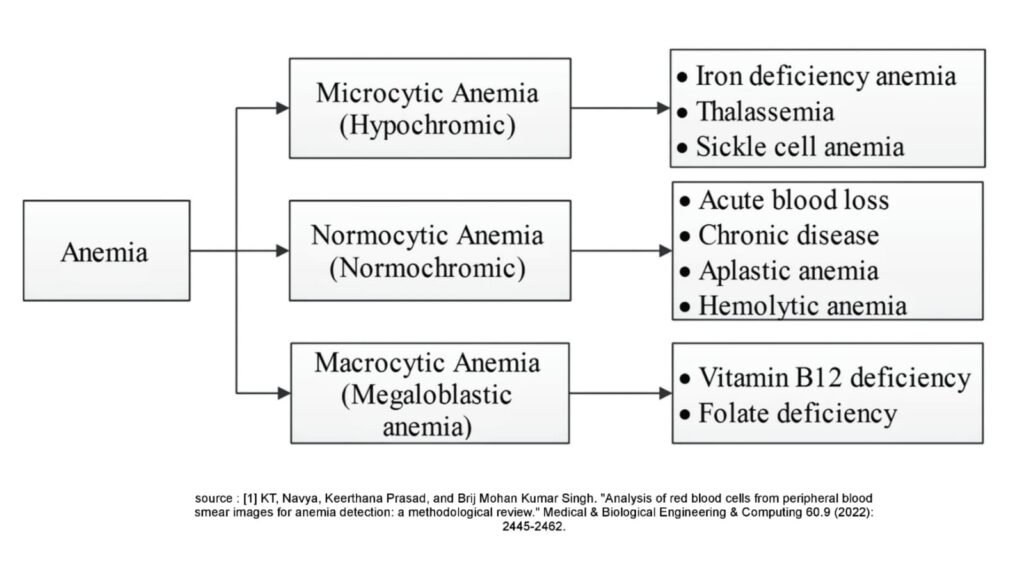
There are several types of anemia, which are classified based on the underlying cause of the condition [1] [2]. Some of the most common types of anemia include:
1-Iron-deficiency anemia: This is the most common type of anemia and occurs when the body does not have enough iron to produce hemoglobin. Iron-deficiency anemia can be caused by a poor diet, blood loss, or an inability to absorb iron from food.
Treatment : This type of anemia is typically treated with iron supplements, which can be taken orally or through intravenous injection. It is also important to consume iron-rich foods such as red meat, dark leafy greens, and fortified cereals.
Oral iron supplements : Oral iron supplements are available in various forms, such as ferrous bisglycinate, ferrous sulfate, ferrous gluconate, and ferrous fumarate.
It is important to take iron supplements as directed by a healthcare provider, as taking too much iron can be toxic. Common side effects of iron supplements include constipation, nausea, vomiting, and stomach pain. To minimize side effects and maximize absorption, it is recommended to take iron supplements on an empty stomach, with vitamin C-rich foods or supplements to enhance absorption.
It is also important to note that iron supplements may interfere with the absorption of certain medications, such as antibiotics and thyroid medications. Therefore, it is important to inform a healthcare provider of any other medications being taken before starting an iron supplement regimen.
2- Vitamin-deficiency anemia: This type of anemia is caused by a deficiency in either vitamin B12 or folate, which are both essential for the production of red blood cells. Vitamin-deficiency anemia can be caused by a poor diet, malabsorption disorders, or certain medications.
Treatment : Treatment for this type of anemia typically involves supplementation with vitamin B12 or folate. It is also important to consume foods rich in these vitamins, such as meat, fish, and leafy green vegetables.
3- Hemolytic anemia: This type of anemia occurs when red blood cells are destroyed faster than they can be produced. Hemolytic anemia can be caused by inherited conditions, autoimmune disorders, or certain medications.
Treatment : Treatment for this type of anemia depends on the underlying cause, but may include medications to suppress the immune system, blood transfusions, or removal of the spleen.
4- Aplastic anemia: This is a rare type of anemia that occurs when the bone marrow is unable to produce enough red blood cells. Aplastic anemia can be caused by exposure to toxins, certain medications, or an underlying autoimmune disorder.
Treatment : Treatment for this type of anemia may include medications to stimulate the bone marrow, blood transfusions, or stem cell transplantation.
5- Sickle cell anemia: This is an inherited type of anemia that occurs when the red blood cells are shaped like crescents or sickles, which can cause them to get stuck in blood vessels and block blood flow.
Treatment : Treatment for this type of anemia may include pain management, antibiotics to prevent infections, blood transfusions, or bone marrow transplantation.
6- Thalassemia: This is an inherited type of anemia that occurs when the body is unable to produce enough hemoglobin. Thalassemia is more common in people of Mediterranean, African, and Asian descent.
Treatment : Treatment for this type of anemia may include blood transfusions, iron chelation therapy to remove excess iron from the body, or bone marrow transplantation.
Iron supplementation may be necessary for COVID-19 patients who have been diagnosed with anemia due to iron deficiency. However, it’s important to use iron supplementation with caution in COVID-19 patients, as excessive iron intake can potentially worsen the infection.
Some studies have suggested that iron may promote the growth and replication of some viruses, including the SARS-CoV-2 virus that causes COVID-19 [4]. Therefore, the decision to prescribe iron supplementation should be based on the individual patient’s needs and circumstances and should be made by a qualified healthcare provider.
The treatment for anemia in COVID-19 patients will depend on the severity of the anemia and the underlying cause. In general, treatment for anemia may include:
- Iron supplementation: If the anemia is due to iron deficiency, iron supplements may be prescribed to increase the production of red blood cells.
- Blood transfusion: In severe cases of anemia, a blood transfusion may be necessary to replenish the red blood cell supply.
- Treat underlying medical conditions: If the anemia is caused by an underlying medical condition, such as kidney disease or a chronic infection, treating that condition may improve the anemia.
- Oxygen therapy: In some cases, oxygen therapy may be necessary to increase the amount of oxygen in the body and improve the symptoms of anemia.
If you have been diagnosed with COVID-19 and have been prescribed iron supplementation for anemia, it’s crucial to follow your healthcare provider’s instructions closely and to monitor your symptoms carefully. Be sure to discuss any concerns you may have about taking iron supplements with your healthcare provider, who can help you make an informed decision about the risks and benefits of this treatment option.
- Sonnweber, Thomas, et al. “Persisting alterations of iron homeostasis in COVID-19 are associated with non-resolving lung pathologies and poor patients’ performance: a prospective observational cohort study.” Respiratory research1 (2020): 1-9.
- Taneri, PetekEylul, et al. “Anemia and iron metabolism in COVID-19: a systematic review and meta-analysis.” European journal of epidemiology35 (2020): 763-773.
- Cavezzi, Attilio, EmidioTroiani, and Salvatore Corrao. “COVID-19: hemoglobin, iron, and hypoxia beyond inflammation. A narrative review.” Clinics and practice2 (2020): 1271.
- Roldan, Eugenia Quiros, et al. “The possible mechanisms of action of 4-aminoquinolines (chloroquine/hydroxychloroquine) against Sars-Cov-2 infection (COVID-19): A role for iron homeostasis?.” Pharmacological research158 (2020): 104904.
Vitamin K : A necessity in human nutrition
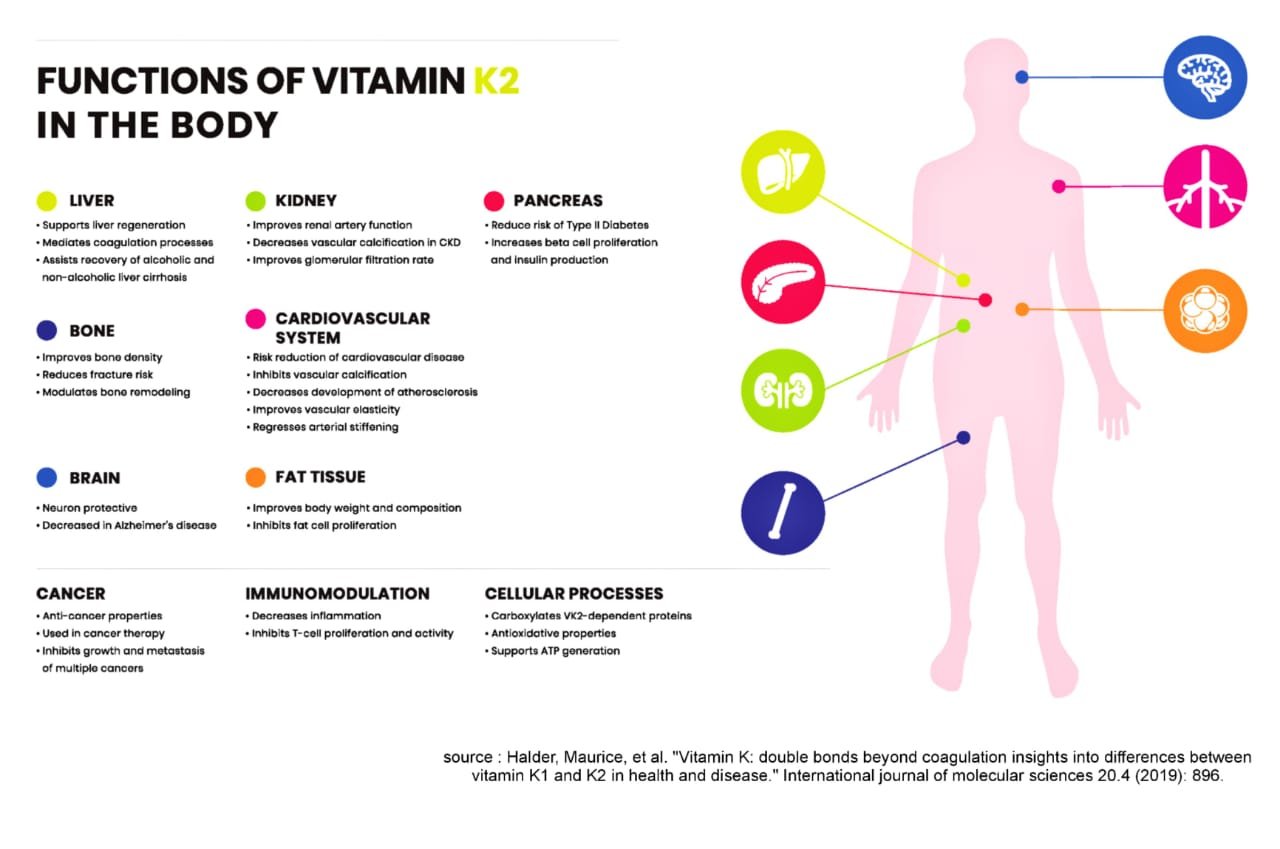
Vitamin K is a group of fat-soluble vitamins that play a key role in the synthesis of hepatic blood coagulation proteins, in bone health, cardiovascular health, prevention of cancer, and suppression of inflammation, prevention of brain oxidative damage, sphingolipid synthesis, and osteoporosis.
In nature, vitamin K occurs in two main forms namely, phylloquinone (vitamin K1) and various menaquinones (vitamin K2). Vitamin K2 is a fat-soluble vitamin that has an ability to cross the blood brainbarrier (BBB) due to its lipophilic nature. Apart from natural Vitamin K, synthetic derivatives such as menadione and menadiol diacetate, that can be metabolized to phylloquinones are also present [2]. Main sources of phylloquinones include plant-based foods like leafy vegetables, fruits, etc. whereas sources of menaquinones include animal-based foods like meat, fishes, dairy products, etc.
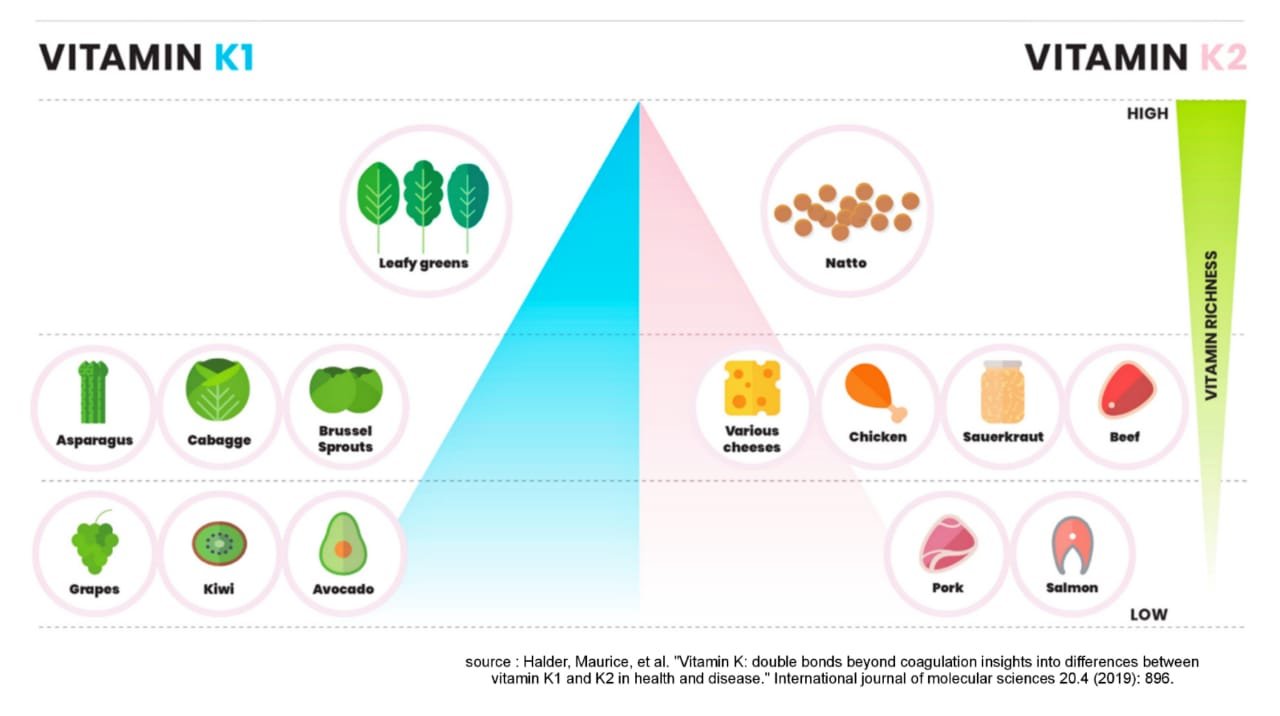
Menaquinones having long chains such as MK-7 (or K2-7) to MK-13 are primarily synthesized by bacteria that include species of aerobic, anaerobic, facultative, as well asobligate anaerobic bacterial species. Some of these bacterial species are present as microflora in the gut. MK-7 or K2-7 is found to be present in very high concentration in a Japanese traditional food called natto. Natto is made by fermenting soybean using Bacillus subtilis. Another source of menaquinones is the microflora of intestine. Although intestinal synthesis has been shown to produce significant quantities of menaquinones, absorption from this source is inefficient to fulfill the required quantities.
Generally, vitamin K1 is a fat-soluble vitamin that is present in leafy green vegetables. It is essential for normal coagulation. It functions as a cofactor required for the activity of vitamin K-dependent (VKD) proteins. Phytonadione (vitamin K1) is a medication used to treat and manage vitamin K deficiency, which is a significant risk factor for intracranial hemorrhage and other bleeds and treat coumarin overdoses.
Vitamin K also plays an important role in bone health. Vitamin K is essential for the synthesis of osteocalcin, a protein that is necessary for bone formation and remodeling. Osteocalcin helps to bind calcium to the bone matrix, which makes bones stronger and more resistant to fractures. Studies have shown that vitamin K deficiency can lead to a decrease in bone mineral density and an increased risk of fractures. On the other hand, getting enough vitamin K through the diet supplementation has been associated with improved bone health.
Vitamin K2-7, also known as menaquinone-7 (MK-7) is a form of vitamin K that has health-beneficial effects in osteoporosis, cardiovascular disease, inflammation, cancer, Alzheimer’s disease, diabetes and peripheral neuropathy. Compared to vitamin K1 (phylloquinone), K2-7 is absorbed more readily and is more bioavailable. Clinical studies have unequivocally demonstrated the utility of vitamin K2-7 supplementation in ameliorating peripheral neuropathy, reducing bone fracture risk and improving cardiovascular health. Studies have also demonstrated K2-7-mediated suppression of growth in cancer cells via cell-cycle arrest, autophagy and apoptosis. K2-7 is also responsible for suppression of proinflammatory mediators such as IL-1α, IL-1β and TNF-α.
In bones health, K2-7 aids in stimulation of osteoblastic formation of bone and suppression ofosteoclastic resorption of bone. In osteoblastic cells, K2-7 helps inprotein synthesis of osteocalcin and various other proteins. Cellular functions in osteoclastic and osteoblastic cells areperformed by various proteins, whose expression is regulated byK2-7. Osteocalcin produced by osteoblastsbinds to calcium present in blood circulation and leads it to the bone matrix. Bone mineralization is influenced by osteocalcin as it has high affinity towards hydroxyapatite, a mineral component of bone; this results in stronger skeleton and less susceptibility tofracture. The newly synthesized osteocalcin is inactive and it requires vitamin K2-7 for converting itself into active form by carboxylation, and later bind to calcium. Vitamin K2-7 is a cofactor of enzyme γ-carboxylase, that converts glutamic acid residues present in the molecule of osteocalcin to γ-carboxyglutamate and is, therefore, necessary for the γ-carboxylation of osteocalcin.
Clinically, supplementation with calcium and vitamin K2-7 aids in the treatment or prevention of certain conditions due to low levels of calcium and vitamin D such as bone loss (osteoporosis), weak bones (osteomalacia/rickets) and decreased activity of the parathyroid gland (hypoparathyroidism), other bone disorders.
[2] Halder, Maurice, et al. “Vitamin K: double bonds beyond coagulation insights into differences between vitamin K1 and K2 in health and disease.” International journal of molecular sciences 20.4 (2019): 896.